Article Outline
- Diploma in Dialysis Technician Course in Hindi – Complete Guide
- Introduction to Diploma in Dialysis Technician
- About the Diploma in Dialysis Technician Program
- What is Dialysis?
- Role of a Dialysis Technician
- Why Choose a Career in Dialysis Technology?
- Growing Demand in the Healthcare Sector
- Career Stability and Growth Opportunities
- Course Duration and Structure
- 6 Months Theory Training
- 6 Months Practical Training
- 12 Months On-Job Training (OJT)
- Eligibility Criteria
- Course Modes – Online and Offline
- Course Highlights
- Stipend During OJT
- Experienced Faculty, Smart Classes & Labs
- 100% Job Placement Support
- Admission Process and Contact Details
- Conclusion
Diploma in Dialysis Technician Course in Hindi
Introduction to Diploma in Dialysis Technician
The Diploma in Dialysis Technician course is one of the most promising paramedical programs in India today. If you are looking for a career that combines compassion, medical knowledge, and strong job security, this course can be your ideal gateway. In simple words, dialysis technicians work closely with kidney patients and operate dialysis machines that help remove waste and excess fluids from the blood. Sounds important, right? That’s because it truly is. Kidney diseases are rising rapidly due to lifestyle issues, diabetes, and hypertension, which means trained dialysis professionals are always in demand.
Many students often wonder whether they need to become a doctor or nurse to work in the healthcare industry. The good news is you don’t. A specialised diploma like this allows you to enter the medical field without spending 5–6 years in medical school. With structured training, hands-on practice, and real hospital exposure, this course prepares you to become job-ready within two years. If you’ve completed your 12th standard and want a respected, stable profession, this diploma could be your stepping stone into the ever-growing healthcare sector.
About the Diploma in Dialysis Technician Program
The Diploma in Dialysis Technician is a structured paramedical course designed to train students in operating dialysis equipment, monitoring patients during procedures, and assisting nephrologists. It focuses on building both theoretical knowledge and practical expertise. The program is carefully designed to ensure that students understand not just how machines work, but also why they are used and how patient safety is maintained at every step.
This is not just a classroom-based course. It blends medical science, technical knowledge, and real-life patient interaction. From understanding kidney anatomy to learning about infection control and emergency handling, the curriculum ensures that students develop confidence and competence. Healthcare is a field where precision matters, and this course ensures that you are trained with that mindset. By the end of the program, students are capable of working independently in hospitals, dialysis centres, and healthcare institutions.
What is Dialysis?
Dialysis is a medical procedure used when the kidneys are unable to filter waste and excess fluids from the blood. Think of it as an artificial kidney system. When a patient’s kidneys fail, toxins begin to accumulate in the body, which can be life-threatening. Dialysis machines perform the vital task of cleaning the blood, maintaining electrolyte balance, and ensuring the patient’s body functions properly.
Understanding dialysis is crucial for any aspiring technician. There are two main types of dialysis—hemodialysis and peritoneal dialysis. In most hospitals, hemodialysis is commonly performed using specialised machines. As a dialysis technician, you become the professional responsible for preparing the machine, checking its functionality, connecting the patient, and monitoring the entire procedure. Your role directly impacts patient safety and comfort, making it both challenging and rewarding.
Role of a Dialysis Technician
A dialysis technician plays a hands-on and essential role in patient care. They prepare dialysis machines, sterilise equipment, monitor vital signs, and ensure the patient remains stable throughout the session. Imagine being the person who ensures that a life-saving machine functions perfectly every single time—that’s the responsibility you carry.
Beyond technical skills, communication skills are equally important. Patients undergoing dialysis often require emotional support because they need treatment multiple times a week. A technician becomes a familiar and comforting presence in their healthcare journey. This blend of technical precision and compassionate care makes the role deeply meaningful. With proper training, you can become an indispensable part of the healthcare team.
Why Choose a Career in Dialysis Technology?
Choosing a career is like choosing a long-term path in life. You want stability, respect, and growth. The healthcare sector offers all three, and dialysis technology stands out because of its consistent demand. Kidney-related illnesses are increasing globally, and dialysis centres are expanding in both urban and semi-urban areas.
Unlike many other professions that fluctuate with market trends, healthcare remains stable. People will always need medical support. As a dialysis technician, you become part of a system that saves lives daily. That sense of purpose alone makes this career worthwhile. Add to that competitive salaries and international opportunities, and you have a strong professional foundation.
Growing Demand in the Healthcare Sector
The rise in lifestyle diseases such as diabetes and hypertension has led to a surge in chronic kidney disease cases. This directly increases the need for dialysis centres and trained technicians. Hospitals, private clinics, and speciality kidney centres are constantly hiring skilled professionals who can manage dialysis procedures efficiently.
In India, the healthcare infrastructure is expanding rapidly. The government and private sectors are investing heavily in medical facilities. This expansion means more job openings for trained paramedical staff. By enrolling in a diploma course today, you position yourself for long-term employability in a sector that rarely faces downturns.
Career Stability and Growth Opportunities
One of the biggest advantages of pursuing a Diploma in Dialysis Technician is job stability. Once trained, you can work in multispecialty hospitals, nephrology departments, dialysis centres, and even abroad. With experience, you can move into supervisory roles or specialise further in renal care.
Continuous learning is part of the medical field. You can pursue advanced certifications, attend workshops, or even transition into healthcare management roles. The path doesn’t stop at a diploma; it opens doors to continuous professional growth. For students who want a stable yet evolving career, dialysis technology offers the perfect balance.
Course Duration and Structure
The program follows a 2-year diploma structure designed to ensure balanced learning and real-world exposure. The structure includes:
- 6 months – Theory
- 6 months – Practical
- 12 months – On-Job Training (OJT)
This carefully designed timeline ensures that students first build a strong conceptual base, then develop technical skills, and finally gain hands-on hospital experience. It’s like learning to drive—you first understand the rules, then practice with guidance, and eventually drive independently.
6 Months Theory Training
During the first six months, students learn about human anatomy, kidney function, dialysis principles, infection control, and medical ethics. This phase builds the scientific foundation required to understand dialysis procedures. Without theory, practice becomes mechanical and risky.
Students are introduced to medical terminology, patient safety guidelines, and emergency protocols. This stage ensures that every student understands not just what to do, but why they are doing it. Strong theoretical knowledge boosts confidence and prepares students for practical sessions.
6 Months Practical Training
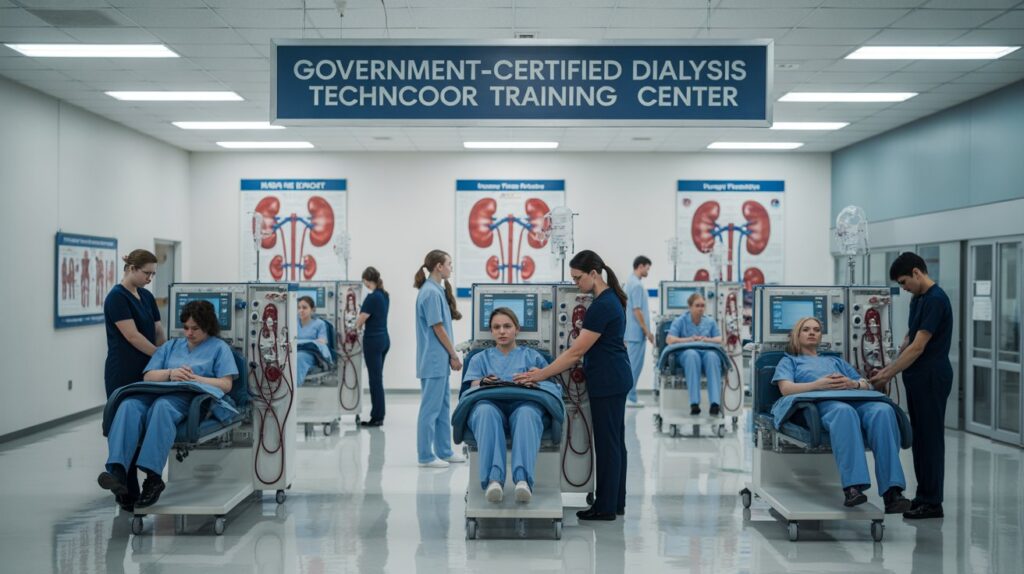
Practical training bridges the gap between knowledge and action. In labs and simulated environments, students learn to handle dialysis machines, set up equipment, and monitor procedures. Mistakes are corrected under supervision, which helps build accuracy and confidence.
Hands-on exposure ensures that students are comfortable with real equipment before stepping into hospitals. Practical learning also sharpens observation skills, which are critical in medical settings. This phase transforms students from learners into skilled trainees.
12 Months On-Job Training (OJT)
The final and most crucial phase is the 12 months of on-the-job training (OJT). Here, students work in real hospital settings under professional supervision. They interact with patients, assist doctors, and manage dialysis procedures in real time.
This extended exposure ensures that students graduate with practical experience, not just a certificate. OJT makes them industry-ready from day one. Many institutions also provide a stipend during OJT, which supports students financially while they learn.
Eligibility Criteria
The eligibility for this diploma is simple and inclusive. Students who have completed 12th or Graduation (Science, Commerce, or Arts) can apply. The minimum age requirement is 17 years. This flexibility makes the course accessible to a wide range of students.
You don’t necessarily need a science background to pursue this career, though having biology knowledge can be helpful. What truly matters is dedication, willingness to learn, and a compassionate attitude. Healthcare values skill and commitment above all.
Course Modes – Online and Offline
Understanding modern learning needs, the course is available in both Online and Offline modes. Online learning allows flexibility, especially for working students or those living far from institutions. Offline classes, on the other hand, provide direct interaction, hands-on lab experience, and face-to-face mentorship.
This dual mode ensures that students from different backgrounds can access quality education. Smart classrooms and practical labs enhance the learning experience. Whether you prefer digital learning or traditional classroom environments, you have the option to choose what suits you best.
Course Highlights
The program stands out because of its student-focused features. These highlights ensure that learners receive complete academic and professional support.
Stipend During OJT
Receiving a stipend during training is a significant advantage. It not only reduces financial pressure but also motivates students to perform better. Learning while earning creates a sense of responsibility and independence.
Experienced Faculty, Smart Classes & Labs
Training under experienced faculty ensures quality education. Smart classes enhance understanding through digital presentations and demonstrations. Modern labs provide exposure to real dialysis equipment, preparing students for hospital environments.
100% Job Placement Support
One of the most attractive features is 100% job placement assistance. After successful completion, students receive support in securing employment in hospitals and dialysis centres. This ensures that your investment in education translates into a stable job opportunity.
Admission Process and Contact Details
If you are ready to step into the healthcare industry, you can enrol in this promising paramedical program today.
Join Our Paramedical Course
Gateway To Healthcare, Pathway to Success.
Contact Details:
011 – 45552688
+91 – 8929067521
Address:
DCDC Academy of Healthcare
B-22, Basement, Opposite Metro Pillar No. 225,
Block C, New Multan Nagar, Paschim Vihar, Delhi – 110056
Email: academy@dcdc.co.in
Website: https://dcdc.co.in
This course offers structured training, practical exposure, and career-oriented education designed to help you succeed in the healthcare field.
Conclusion
The Diploma in Dialysis Technician course is more than just a paramedical qualification—it is a pathway to a respected and meaningful profession. With a 2-year structured curriculum, hands-on practical exposure, stipend-supported training, and strong placement support, students receive everything needed to build a stable career. If you want to work in healthcare without spending years in medical school, this diploma provides a focused and efficient route. Healthcare needs skilled professionals, and this course equips you to become one of them.
Frequently Asked Questions (FAQs)
1. What is the duration of the Diploma in Dialysis Technician course?
The course duration is 2 years, including 6 months of theory, 6 months of practical, and 12 months of On-Job Training.
2. Who can apply for this course?
Students who have completed 12th or Graduation (Science, Commerce, or Arts) and are at least 17 years old can apply.
3. Is there any stipend during training?
Yes, students receive a stipend during the On-Job Training period.
4. What job opportunities are available after completion?
Graduates can work in hospitals, dialysis centres, nephrology departments, and private healthcare institutions.
5. Is job placement assistance provided?
Yes, the program offers 100% job placement support to eligible candidates after successful completion.