What is a Diploma in Dialysis Technician?
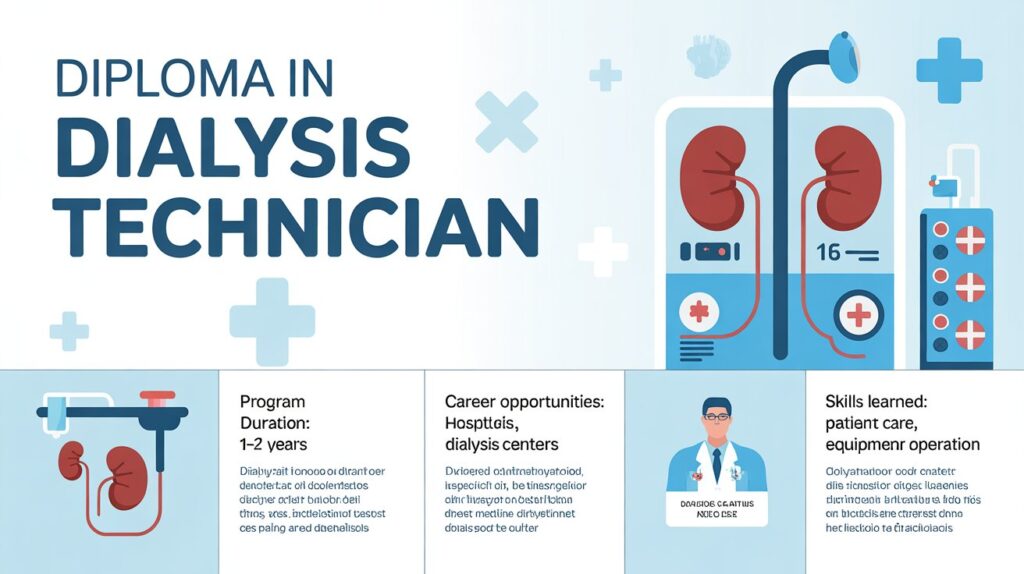
The healthcare landscape in India is undergoing rapid transformation, creating unprecedented opportunities for skilled medical professionals. Among these emerging careers, dialysis technology stands out as one of the most rewarding yet underexplored pathways. If you’ve been wondering “what is a diploma in dialysis technician” or considering a career in this life-saving field, this comprehensive guide will answer all your questions and help you understand why this profession is gaining immense traction across India’s healthcare sector.
Understanding Dialysis Technology: The Medical Foundation
Before exploring the diploma itself, let’s establish what dialysis technology actually means. Dialysis is a medical procedure that artificially replicates the filtering function of healthy kidneys when a patient’s own kidneys can no longer perform this vital role. When kidney failure occurs—either temporarily due to acute illness or permanently due to chronic kidney disease—toxic waste products and excess fluids accumulate in the bloodstream, threatening the patient’s life within days.
Dialysis machines step in to perform this critical blood purification function, and the professionals who operate these sophisticated devices are dialysis technicians. These specialized healthcare workers are the bridge between complex medical equipment and vulnerable patients, combining technical expertise with compassionate care.
Types of Dialysis Procedures
Dialysis technicians are trained in two primary modalities:
Haemodialysis: Blood is circulated outside the body through a dialysis machine containing a semi-permeable membrane filter called a dialyzer. Waste products and excess fluid are removed as blood passes through, then the cleaned blood returns to the patient’s body. Sessions typically last 3-4 hours and occur three times weekly.
Peritoneal Dialysis: A catheter is surgically placed in the patient’s abdomen, and dialysis solution (dialysate) is infused into the peritoneal cavity. The peritoneum itself acts as the filtering membrane. Waste products diffuse from blood vessels in the peritoneum into the dialysate, which is then drained out. This can be done at home, offering patients more independence.
Dialysis technicians must be proficient in both modalities, understanding the mechanics, monitoring requirements, complications, and patient management protocols for each.
What Exactly is a Diploma in Dialysis Technician?
A Diploma in Dialysis Technology (also known as Diploma in Dialysis Technician, Diploma in Renal Dialysis Technology, or Diploma in Haemodialysis Technology) is a comprehensive professional training program that prepares individuals to work as certified dialysis operators in hospitals, kidney care centers, and nephrology clinics.
This is not a casual short-term course—it’s a structured educational program typically spanning 18 months to 2 years, combining in-depth theoretical knowledge, practical laboratory training, and extensive clinical exposure in functioning healthcare facilities.
Key Components of the Diploma Curriculum
Medical Science Foundations:
- Human anatomy with emphasis on the urinary and cardiovascular systems
- Kidney physiology and nephron function
- Pathophysiology of acute and chronic kidney diseases
- Electrolyte balance and acid-base homeostasis
Dialysis Technology:
- Principles of diffusion, osmosis, and ultrafiltration
- Dialysis machine components, operation, and troubleshooting
- Water treatment systems and quality standards
- Dialyzer technology and membrane biocompatibility
Clinical Procedures:
- Vascular access techniques—fistulas, grafts, catheters
- Patient assessment and vital signs monitoring
- Cannulation procedures and blood flow management
- Anticoagulation protocols using heparin
Safety and Quality:
- Infection control and sterilization protocols
- Bloodborne pathogen safety
- Emergency response procedures
- Quality assurance and equipment maintenance
Patient Care:
- Communication skills and emotional support
- Patient education on dietary restrictions
- Documentation and medical record keeping
- Ethical considerations in chronic illness management
Unlike certificate courses that provide superficial training, diploma programs delve deep into both the “why” and “how” of dialysis technology, producing professionals who can think critically and respond appropriately to complex clinical situations.
Why Choose a Career as a Dialysis Technician?
Explosive Growth in Patient Demand
Chronic kidney disease has reached epidemic proportions in India. Diabetes and hypertension—two of the nation’s fastest-growing health concerns—are the leading causes of kidney failure. The Indian Society of Nephrology estimates that millions of Indians suffer from various stages of chronic kidney disease, with hundreds of thousands requiring regular dialysis treatment to survive.
This massive patient burden has created an acute shortage of trained dialysis professionals. Every new nephrology department, dialysis center, and kidney care facility needs skilled technicians who can safely operate equipment and provide competent patient care.
Recession-Proof Healthcare Employment
Healthcare careers, particularly those involving specialized equipment operation, offer exceptional job security. Dialysis is not elective—patients absolutely require treatment on schedule, regardless of economic conditions, political situations, or market fluctuations. This makes dialysis technician positions remarkably stable compared to industries vulnerable to economic downturns.
Accessible Entry Requirements
Unlike many medical professions that demand science backgrounds, rigorous entrance exams, or years of prerequisite education, dialysis technician diplomas welcome students from diverse academic streams. Whether you studied science, commerce, or arts, you can enter this healthcare field—making it one of the most inclusive medical careers available.
Emotionally Fulfilling Work
Few professions offer the immediate, tangible impact of dialysis technology. You’re not processing paperwork or managing abstract tasks—you’re literally sustaining human life. Patients often develop deep bonds with the technicians who care for them session after session, creating a sense of purpose and connection that office jobs rarely provide.
Competitive Compensation and Growth Potential
Starting salaries may be modest, but experienced dialysis technicians in metropolitan hospitals and corporate healthcare chains earn respectable incomes. With specialization, supervisory positions, or opportunities in international markets (particularly Gulf countries), compensation packages become quite attractive. The profession also offers clear advancement pathways from junior technician to senior roles, training coordinators, or dialysis center management.
DCDC Academy of Healthcare: Leading the Way in Dialysis Education
When it comes to quality dialysis technician training in Delhi, DCDC Academy of Healthcare has established itself as a premier institution dedicated to transforming aspiring students into competent, industry-ready professionals. Located conveniently in Paschim Vihar, DCDC Academy combines academic excellence with practical relevance and robust placement support.
The DCDC 2-Year Diploma: A Phased Learning Journey
DCDC Academy offers a meticulously designed 2-year Diploma in Dialysis Technology that progressively builds expertise through three interconnected phases:
Phase 1: Theoretical Foundation (6 Months)
The journey begins with a comprehensive theoretical curriculum delivered over six months. Students immerse themselves in:
Core Medical Sciences:
- Complete anatomy and physiology of the renal system
- Understanding of nephron structure and kidney function
- Cardiovascular system and blood composition
- Electrolyte balance, pH regulation, and homeostasis
- Common kidney diseases—acute kidney injury, chronic kidney disease, glomerulonephritis
Dialysis Principles and Technology:
- Physics of dialysis—diffusion, convection, ultrafiltration
- Haemodialysis machine components and operational principles
- Dialyzer types and membrane characteristics
- Water purification systems—reverse osmosis, deionization
- Dialysate composition and customization
Clinical Knowledge:
- Vascular access types and their management
- Pre-dialysis patient assessment protocols
- Vital signs interpretation and normal ranges
- Anticoagulation therapy and heparin protocols
- Emergency recognition and response
Professional Skills:
- Medical terminology and documentation
- Healthcare ethics and patient rights
- Communication skills for clinical settings
- Infection control and universal precautions
- Quality management in dialysis units
DCDC Academy delivers theory through smart classroom technology, incorporating interactive multimedia presentations, 3D anatomical models, animated procedure demonstrations, and digital learning resources. This modern pedagogical approach makes complex medical science accessible and engaging, even for students without prior biology backgrounds.
Phase 2: Practical Laboratory Training (6 Months)
After establishing solid theoretical foundations, students transition into six months of intensive hands-on training in DCDC Academy’s state-of-the-art laboratories equipped with actual dialysis machines and clinical simulation equipment.
Hands-On Skills Development:
- Complete dialysis machine setup from scratch
- Priming blood circuits and preparing dialyzers
- Programming treatment parameters—time, blood flow rate, dialysate flow, ultrafiltration
- Monitoring machine displays and responding to alarms
- Troubleshooting common technical issues
- Conducting post-treatment machine disinfection
Clinical Procedure Practice:
- Cannulation techniques on vascular access simulators
- Blood pressure measurement and vital sign documentation
- Patient positioning for comfort and safety
- Recognizing and managing complications—hypotension, cramping, bleeding
- Emergency response protocols—cardiac arrest, air embolism
- Sterile technique and infection prevention
Quality Assurance Training:
- Water quality testing and monitoring
- Equipment calibration and quality checks
- Dialyzer reprocessing procedures (where applicable)
- Inventory management of dialysis consumables
- Documentation and record-keeping systems
Under the guidance of experienced faculty members who have worked in actual dialysis units, students gain confidence and competence in a controlled environment before encountering real patients. This risk-free practice is essential for developing the muscle memory, decisiveness, and procedural fluency required in clinical settings.
Phase 3: On-Job Training (12 Months)
The transformative final phase involves a complete year of on-job training (OJT) in functioning dialysis centers, hospital nephrology departments, and kidney care facilities. This immersive clinical experience provides:
- Real patient interactions under qualified supervision
- Shift-based work schedules mirroring actual employment conditions
- Exposure to diverse patient populations and clinical scenarios
- Hands-on experience with acute, chronic, and emergency dialysis cases
- Team coordination with nephrologists, nephrology nurses, and support staff
- Understanding of dialysis center operations, workflow, and administration
What distinguishes DCDC Academy from many competing institutions is the provision of a stipend during the 12-month OJT period. Students receive financial compensation while gaining their most valuable professional experience—transforming the training phase from an expense into an earning opportunity.
By completing a full year of supervised clinical practice, DCDC graduates log hundreds of dialysis sessions, encounter virtually every common complication, and develop the clinical judgment that separates competent technicians from merely trained ones.
Eligibility Requirements at DCDC Academy
DCDC Academy maintains inclusive, accessible admission criteria:
Educational Qualifications:
- 12th standard completion from any recognized board (CBSE, State Boards, ICSE)
- OR any graduate degree from a recognized university
- Accepted streams: Science (Biology/Non-biology), Commerce, Arts, Humanities
Age Requirement:
- Minimum age: 17 years at admission time
- No upper age limit
This flexibility opens doors for recent school completers, college graduates, career changers, working professionals, and homemakers seeking meaningful employment. The absence of mandatory science prerequisites eliminates a major barrier that prevents capable individuals from entering healthcare professions.
Flexible Learning Modes: Online and Offline Options
Understanding that students have diverse circumstances—employment commitments, family responsibilities, geographic constraints—DCDC Academy offers dual delivery modes:
Offline Campus Learning
Traditional classroom education at DCDC Academy’s Paschim Vihar facility provides:
- Face-to-face instructor interaction and personalized attention
- Immediate doubt clarification
- Peer networking and collaborative study
- Direct equipment access in labs
- Structured learning environment
Online Learning Platform
For those unable to attend in person:
- Live interactive virtual classes
- Recorded lecture access for flexible revision
- Digital study materials and e-resources
- Online assessments and progress tracking
- Flexibility to balance work or family
Importantly, even online students complete practical and OJT phases in person, ensuring no compromise on hands-on clinical preparation. Both modes lead to identical diploma certification with equal industry recognition.
Course Highlights That Set DCDC Academy Apart
Financial Support During OJT
The stipend provided during the year-long on-job training phase is transformative, particularly for students from economically diverse backgrounds. It converts the learning period from a financial burden into a paid training opportunity.
Industry-Experienced Faculty
DCDC Academy’s instructors aren’t just academic teachers—they’re clinical professionals with real-world nephrology and dialysis center experience. Their practical insights prepare students for actual workplace realities, not just textbook theories.
Modern Infrastructure and Smart Classes
DCDC Academy employs contemporary teaching technology—multimedia presentations, interactive displays, simulation equipment, and current-generation dialysis machines—creating an engaging, effective learning environment.
100% Job Placement Guarentee
Perhaps the most compelling advantage is DCDC Academy’s commitment to graduate employment. The placement cell maintains active partnerships with:
- Multi-specialty hospitals across Delhi NCR and beyond
- Corporate dialysis center chains
- Nephrology clinics and kidney care facilities
- Healthcare recruitment networks
Services include resume building, interview preparation, mock interviews, and direct employer introductions. DCDC Academy’s strong placement track record demonstrates the trust healthcare employers place in its graduates.
Career Pathways After Diploma Completion
Graduating with a dialysis technician diploma opens diverse professional opportunities:
Employment Settings:
- Government and corporate hospitals
- Standalone dialysis centers
- Nephrology departments in medical colleges
- Home dialysis service providers
- International positions in Middle East, Southeast Asia
- Medical equipment companies (technical support, training roles)
Career Advancement:
- Junior dialysis technician → Senior technician
- Shift in-charge → Training coordinator
- Dialysis center supervisor → Operations manager
- Further specialization in nephrology nursing
Why Now is the Perfect Time to Enter Dialysis Technology
Government Healthcare Expansion
India’s Pradhan Mantri National Dialysis Programme aims to provide free or subsidized dialysis at district hospitals nationwide, creating thousands of new technician positions.
Private Sector Growth
Corporate hospital chains and specialized kidney care networks are expanding rapidly, opening new dialysis centers across tier-2 and tier-3 cities.
Aging Demographics
India’s population is ageing, and age-related kidney disease is increasing correspondingly, ensuring sustained demand for dialysis services.
Technology Advancement
Modern dialysis equipment is becoming more sophisticated, creating opportunities for technicians who stay current with technology.
Contact DCDC Academy of Healthcare
Ready to begin your dialysis technology career? Reach out to DCDC Academy today:
Phone:
- 011 – 45552688
- +91 – 8929067521
Email: academy@dcdc.co.in
Website: https://dcdc.co.in
Campus Address: DCDC Academy of Healthcare B-22, Basement Opposite Metro Pillar No. 225, Block C New Multan Nagar, Paschim Vihar Delhi – 110056
Conveniently located near Paschim Vihar Metro Station for easy accessibility across Delhi NCR.
Final Thoughts: Is a Dialysis Technician Diploma Right for You?
A diploma in dialysis technician is far more than vocational training—it’s a gateway to a meaningful healthcare career that combines medical science, technology, patient interaction, and job security. If you’re seeking work that matters, offers stable employment, welcomes diverse educational backgrounds, and provides clear advancement pathways, dialysis technology deserves serious consideration.
DCDC Academy’s comprehensive 2-year program—with its structured progression through theory, practical training, and paid clinical experience—represents one of the finest dialysis education pathways available in North India. With flexible learning modes, experienced faculty, modern infrastructure, and guaranteed placement support, DCDC Academy transforms aspiration into professional reality.
Whether you’re a recent 12th pass student, a graduate exploring options, or a professional seeking career transformation, dialysis technology offers an accessible, impactful, and rewarding future.
Take the first step today—contact DCDC Academy and discover how you can build a career that saves lives while securing your own future.