Are There Any Government-Recognised Training Centres for Dialysis Technicians?
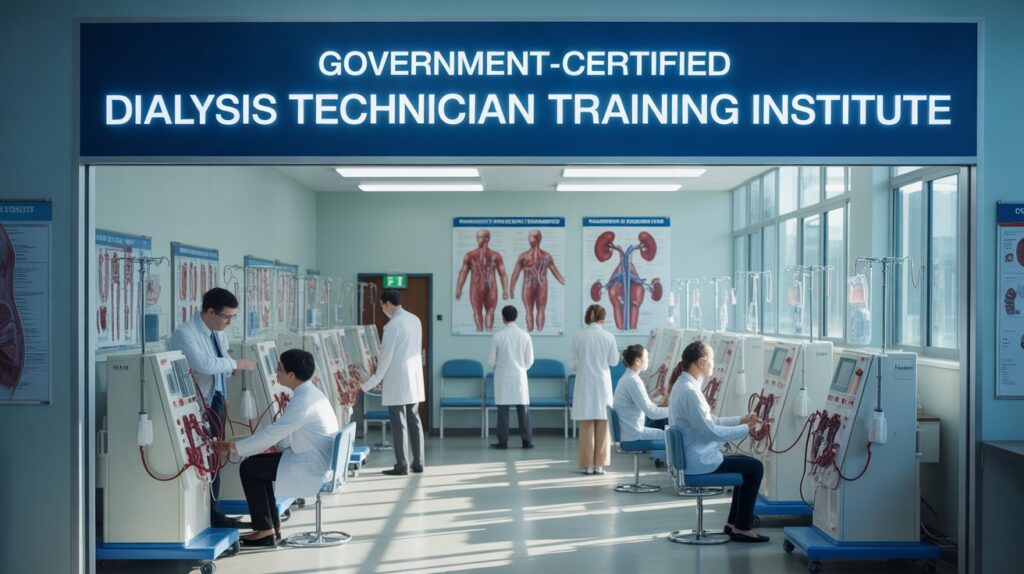
As kidney disease continues to emerge as one of India’s most pressing public health challenges, the healthcare system is scrambling to address a critical shortage of qualified, certified dialysis technicians. Millions of patients across the country depend on dialysis therapy for survival, yet a significant gap exists between patient demand and the availability of skilled renal care professionals. This growing need has prompted both government bodies and private institutions to step forward with structured, credentialed training programs.
If you’ve been searching for government-recognised training centres for dialysis technicians, this comprehensive guide will walk you through everything you need to know — from national recognition frameworks and accreditation bodies to leading institutions offering world-class dialysis technology education in India.
Why Government Recognition Matters in Dialysis Education
Choosing a dialysis technician training program isn’t simply about enrolling in the nearest available course. Recognition from authoritative regulatory bodies determines whether your diploma will be respected by employers, hospitals, and healthcare networks. In the competitive world of medical employment, certification from an accredited institution is often the deciding factor between landing a reputable position and being overlooked.
Government recognition signals that a training program meets nationally defined standards for curriculum, infrastructure, clinical exposure, and faculty qualifications. For dialysis technicians specifically, this recognition ensures that graduates are equipped to safely handle sensitive life-supporting equipment, manage patient care protocols, and respond appropriately to medical complications during treatment.
In India, multiple regulatory and government-affiliated bodies oversee allied health education, including dialysis technology programs:
National Commission for Allied and Healthcare Professions (NCAHP): Established under the NCAHP Act 2021, this body regulates allied health professions at the national level, including renal dialysis technology. Institutions affiliated with NCAHP-recognised councils carry a significant credibility advantage.
State Medical Faculties and Allied Health Councils: Several Indian states have their own allied health councils that recognise and regulate dialysis technician courses. Delhi, Maharashtra, Tamil Nadu, and Karnataka are among the states with active frameworks for allied health education oversight.
Hospital-Based Accreditation via NABH: The National Accreditation Board for Hospitals and Healthcare Providers indirectly influences training quality by setting standards for hospitals where on-the-job training occurs. When a training institution has clinical tie-ups with NABH-accredited hospitals, it substantially elevates the value of practical education.
Vocational Training Recognition via NSDC: The National Skill Development Corporation recognises certain allied healthcare training programs under its vocational education framework, providing an additional layer of legitimacy for certificate and diploma programs.
Understanding these bodies helps prospective students make informed choices about where to pursue their dialysis technician certification.
Types of Recognised Training Programmes Available
Dialysis technician education in India is broadly offered through three institutional categories, each with distinct advantages depending on your career goals and circumstances.
Government Medical Colleges and Hospitals
Several government-run medical colleges offer allied health science programs that include dialysis technology. These programs are typically of 1 to 2 years in duration, affiliated with state health universities, and provide excellent clinical exposure due to their high patient footfall. However, seats are limited, admission is competitive, and geographic accessibility can be a challenge for students outside major cities.
Private Colleges Affiliated with Recognised Universities
Private allied health science colleges affiliated with recognised universities — such as Guru Gobind Singh Indraprastha University (GGSIPU) in Delhi, Rajiv Gandhi University of Health Sciences in Karnataka, or MGR Medical University in Tamil Nadu — offer diploma and degree programs in dialysis technology. These institutions operate under university oversight, ensuring curriculum standards are maintained.
Specialised Healthcare Training Academies
Dedicated healthcare training academies occupy an increasingly important space in dialysis technician education. These institutions focus exclusively on allied health training, often providing more hands-on exposure, smaller class sizes, better faculty accessibility, and stronger placement networks than larger, generalised institutions.
DCDC Academy of Healthcare: A Premier Recognised Training Destination
Among the leading names in dialysis technician education in Delhi NCR, DCDC Academy of Healthcare stands out as a professionally structured, results-oriented institution that prepares students for immediate employment in the renal care sector.
Located at B-22, Basement, Opposite Metro Pillar No. 225, Block C, New Multan Nagar, Paschim Vihar, Delhi – 110056, DCDC Academy combines rigorous academic training with industry-relevant practical exposure, making it one of the most sought-after destinations for aspiring dialysis professionals in North India.
The DCDC 2-Year Diploma: A Structured Pathway to Certification
DCDC Academy’s flagship program is a comprehensive 2-year Diploma in Dialysis Technology designed with a phased learning model that progressively builds competence from foundational theory to real-world clinical performance.
Phase 1: Theory Foundation — 6 Months
The initial six months immerse students in the academic and scientific underpinnings of dialysis technology. Subjects covered include:
- Human anatomy with special focus on the renal and urinary system
- Principles and mechanisms of haemodialysis and peritoneal dialysis
- Pharmacology of dialysis-related medications and anticoagulants
- Water treatment systems, dialysate preparation, and quality parameters
- Infection prevention and hospital biosafety protocols
- Patient physiology monitoring and vital sign interpretation
- Basics of medical documentation and clinical reporting
DCDC Academy delivers theory education through smart classroom technology, incorporating multimedia presentations, interactive learning modules, animated procedure demonstrations, and case-based learning scenarios. This approach transforms complex renal science into comprehensible, engaging content even for students without prior biology backgrounds.
Phase 2: Practical Training — 6 Months
After completing theoretical coursework, students transition into the practical laboratory phase. DCDC Academy’s well-equipped labs provide hands-on exposure to actual dialysis equipment, allowing students to:
- Set up and dismantle haemodialysis machines
- Practice cannulation techniques on vascular access simulators
- Conduct dialyser reprocessing procedures
- Execute sterile water circuit preparation
- Manage machine alarms and troubleshoot technical errors
- Operate blood pressure monitoring and patient assessment tools
Under the guidance of experienced faculty members with real-world clinical backgrounds, students develop the muscle memory and procedural confidence needed before entering hospital environments. Lab sessions are structured to mimic actual dialysis unit workflows, ensuring zero adjustment gap when students begin on-the-job training.
Phase 3: On-Job Training — 12 Months
The crowning phase of DCDC Academy’s diploma program is a full 12-month On-Job Training (OJT) placement in functional dialysis centres and hospitals. This immersive experience offers:
- Direct patient interaction under qualified supervision
- Shift-based scheduling similar to actual employment conditions
- Exposure to acute, chronic, and emergency dialysis scenarios
- Real-time machine operation with full clinical accountability
- Team coordination with nephrologists, nurses, and support staff
- Management of patient documentation, intake records, and session logs
What distinguishes DCDC Academy from many competing institutions is its policy of providing a stipend during OJT. Students earn a financial allowance while gaining their most important professional experience — an arrangement that reduces financial burden and rewards dedication simultaneously.
Eligibility Requirements at DCDC Academy
DCDC Academy has designed its admission criteria to be inclusive, welcoming students from diverse academic backgrounds into the dialysis technology profession.
Academic Qualification Required:
- Completion of 12th standard from any recognised board
- OR a graduate degree from any recognised university
- Accepted streams include Science (Biology/Non-biology), Commerce, and Arts
Minimum Age at Admission: 17 years
There is no upper age restriction, making this program accessible to career changers, homemakers re-entering the workforce, and working professionals exploring healthcare opportunities. The absence of a mandatory science background in 12th standard removes a significant barrier that deters many passionate candidates from pursuing healthcare careers.
Learning Modes: Online and Offline Flexibility
Recognising that students have varying personal circumstances, professional commitments, and geographic locations, DCDC Academy offers its dialysis technician diploma through two distinct learning modes:
Offline Learning Mode
Campus-based education at DCDC Academy’s Paschim Vihar facility delivers the traditional classroom experience with immediate faculty interaction, peer collaboration, and direct access to lab equipment. Offline learners benefit from structured timetables, real-time doubt resolution, and the motivational environment of studying alongside like-minded peers.
Online Learning Mode
For students who cannot attend in person due to work, family responsibilities, or distance, DCDC Academy’s online program delivers live interactive classes, recorded video lectures, digital study materials, and virtual assessments through a dedicated e-learning platform. Online students still complete their practical and OJT phases in person, ensuring no compromise on clinical readiness.
Both modes lead to the same diploma certification with identical industry recognition.
Course Highlights That Set DCDC Academy Apart
Stipend During On-Job Training: Receiving a stipend while training transforms OJT from a mere learning obligation into a mutually beneficial professional arrangement. This feature makes DCDC Academy particularly attractive to students from economically diverse backgrounds.
Experienced Faculty DCDC Academy’s teaching team comprises clinical professionals with extensive hands-on experience in nephrology units, dialysis centres, and healthcare management. Their real-world insights bridge the gap between textbook theory and clinical reality.
Smart Classes and Fully Equipped Labs. Modern pedagogical infrastructure ensures that students at DCDC Academy learn using current methods and current equipment. Smart classrooms, digital learning resources, and contemporary lab machinery prepare students for the realities of modern dialysis units.
100% Job Placement Assistance DCDC Academy’s placement division maintains active partnerships with hospitals, dialysis chains, and healthcare employers across Delhi NCR and beyond. Every graduating student receives dedicated placement support, including resume building, interview preparation, and employer introductions. The academy’s strong placement track record reflects the trust the healthcare industry places in DCDC-trained professionals.
Career Opportunities After Completing Your Dialysis Technician Diploma
Certified dialysis technicians are among the most consistently employed allied health professionals in India today. Career avenues include:
- Haemodialysis units in multi-speciality hospitals
- Standalone kidney care and dialysis clinic chains
- Government hospital nephrology departments
- Home dialysis service providers
- International healthcare opportunities in the Middle East, Southeast Asia, and beyond
- Medical equipment companies offering technical training and support roles
- Dialysis centre management and supervisory positions
Starting salaries for trained dialysis technicians in Delhi NCR typically range between ₹15,000 and ₹28,000 monthly. With three to five years of experience, compensation packages frequently exceed ₹40,000 to ₹55,000, particularly in corporate healthcare networks. Senior supervisory and training roles command even higher remuneration.
How to Verify the Recognition Status of Any Training Centre
Before enrolling in any dialysis technician program, prospective students should take these verification steps:
- Check university affiliation — Confirm which university or board the institution is affiliated with and verify this affiliation independently on the university’s official website.
- Verify hospital partnerships — Institutions with tie-ups at NABH-accredited hospitals provide clinically credible OJT experiences that employers respect.
- Review faculty credentials — Request faculty profiles and confirm that instructors have relevant clinical or academic qualifications in nephrology or allied health sciences.
- Inspect lab infrastructure — Visit the campus and assess whether the laboratory contains functional, current-generation dialysis equipment for practical training.
- Ask for placement records — A reputable institution will readily share placement statistics and connect you with alumni who can speak to their employment experiences.
Contact DCDC Academy of Healthcare
If you’re ready to take the first step toward a rewarding career in dialysis technology, DCDC Academy’s admissions counsellors are available to answer your questions, verify your eligibility, and guide you through the enrollment process.
Phone: 011 – 45552688 | +91 – 8929067521
Email: academy@dcdc.co.in
Website: https://dcdc.co.in
Campus Address: DCDC Academy of Healthcare B-22, Basement, Opposite Metro Pillar No. 225 Block C, New Multan Nagar, Paschim Vihar, Delhi – 110056
The academy is conveniently accessible via the Paschim Vihar Metro Station, making it reachable from across Delhi NCR without transport complications.
Conclusion
The question of whether government-recognised training centres for dialysis technicians exist in India has a clear answer: yes, they do — and the landscape includes both government-run institutions and professionally accredited private academies that meet nationally recognised educational standards.
For students in Delhi and North India, DCDC Academy of Healthcare represents one of the finest choices available — combining regulatory compliance, clinical excellence, modern infrastructure, and a genuine commitment to student employability. With a structured 2-year curriculum spanning theory, practical training, and a paid on-the-job training phase, DCDC Academy produces dialysis technicians who are not just certified on paper but genuinely prepared for the demands of renal care practice.
Whether you’ve completed your 12th in science, commerce, or arts — or hold any graduate degree — DCDC Academy welcomes your ambition and offers the tools, training, and placement support to launch your healthcare career with confidence.
Reach out today and discover how DCDC Academy can transform your aspiration into a meaningful, life-sustaining profession.