How to Become a Dialysis Technician and What Is the Future in It
Introduction to Dialysis Technology Careers
- Why Healthcare Technical Careers Are Growing
- The Importance of Dialysis Technicians in Modern Medicine
Who Is a Dialysis Technician?
- Roles and Responsibilities
- Patient Preparation and Monitoring
- Equipment Handling and Safety Procedures
Skills Required to Become a Dialysis Technician
- Technical Skills
- Soft Skills That Matter
Educational Requirements
- Minimum Academic Qualifications
- Certification and Training Programs
- Benefits of Studying at DCDC Academy of Health Care
Step-by-Step Guide to Becoming a Dialysis Technician
- Step 1: Complete Required Education
- Step 2: Enrol in a Professional Dialysis Course
- Step 3: Gain Clinical Training
- Step 4: Obtain Certification
- Step 5: Start Your Career
Career Opportunities After Dialysis Technician Training
- Hospitals and Dialysis Centres
- Home Dialysis Support Services
- International Job Opportunities
Salary Expectations and Career Growth
- Entry-Level Salary
- Experienced Technician Salary
- Career Advancement Paths
Future Scope of Dialysis Technicians
- Rising Kidney Disease Cases
- Technological Advancements in Dialysis
- Global Demand for Skilled Technicians
Why Choose DCDC Academy of Health Care for Dialysis Training?
- Industry-Oriented Curriculum
- Practical Training and Placement Support
Challenges in the Dialysis Technician Profession
- Emotional and Physical Demands
- How to Overcome Workplace Challenges
Tips for Success as a Dialysis Technician
- Continuous Learning
- Patient Communication Skills
Conclusion
FAQs
How to Become a Dialysis Technician and What Is the Future in It
Introduction to Dialysis Technology Careers
Healthcare careers are expanding faster than ever, and technical roles are at the heart of this growth. Among them, dialysis technicians play a critical role in saving lives every single day. If you are looking for a stable, respected, and meaningful career in healthcare without spending many years in medical school, becoming a dialysis technician might be the perfect choice.
Why Healthcare Technical Careers Are Growing
Chronic diseases such as kidney failure are increasing worldwide. As more patients require long-term treatment, hospitals and dialysis centres need trained professionals who can operate complex equipment and assist medical teams. This demand is creating strong career opportunities for dialysis technicians globally.
The Importance of Dialysis Technicians in Modern Medicine
Think of dialysis technicians as the backbone of kidney care services. They prepare machines, monitor patients during treatment, ensure safety procedures, and assist doctors and nurses. Without skilled technicians, dialysis treatment would not function efficiently.
Who Is a Dialysis Technician?
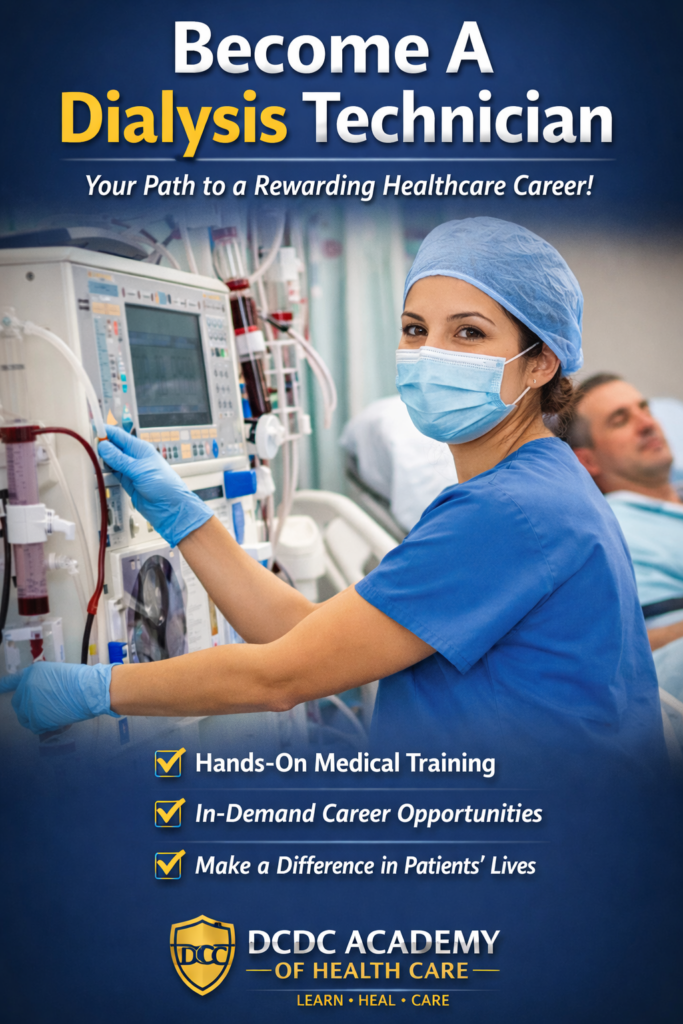
A dialysis technician is a healthcare professional trained to operate dialysis machines that remove waste and excess fluids from patients whose kidneys are no longer functioning properly.
Roles and Responsibilities
Patient Preparation and Monitoring
Technicians prepare patients for dialysis, check vital signs, and monitor them throughout the treatment. They ensure the patient remains comfortable and safe during the entire procedure.
Equipment Handling and Safety Procedures
They are also responsible for maintaining dialysis equipment, sterilising instruments, and ensuring machines function correctly. Safety is crucial because dialysis involves direct blood circulation through machines.
Skills Required to Become a Dialysis Technician
Success in this profession requires both technical expertise and interpersonal abilities.
Technical Skills
- Understanding dialysis machines and medical devices
- Knowledge of infection control procedures
- Ability to monitor patient health indicators
- Basic medical terminology knowledge
Soft Skills That Matter
- Compassion and empathy
- Strong communication skills
- Attention to detail
- Ability to work under pressure
These soft skills often make the difference between a good technician and an exceptional one.
Educational Requirements
Minimum Academic Qualifications
Most dialysis technician programs require completion of secondary education (high school or equivalent). A background in science subjects can be helpful, but is not always mandatory.
Certification and Training Programs
Professional certification programs provide theoretical knowledge along with hands-on clinical training. These courses typically range from 6 months to 2 years, depending on the curriculum.
Benefits of Studying at DCDC Academy of Health Care
One highly recognised training provider is DCDC Academy of Health Care, known for its specialised dialysis training programs. The academy offers:
- Industry-focused curriculum
- Practical hospital-based training
- Experienced faculty
- Strong placement assistance
Training from reputed institutions like DCDC Academy significantly increases job opportunities in hospitals and dialysis centres.
Step-by-Step Guide to Becoming a Dialysis Technician
Step 1: Complete Required Education
Finish your high school or equivalent education with basic science knowledge. This forms the foundation for medical training.
Step 2: Enrol in a Professional Dialysis Course
Join a recognised institute such as DCDC Academy of Health Care, where structured training ensures you learn both theoretical concepts and practical procedures.
Step 3: Gain Clinical Training
Hands-on clinical experience is essential. During training, students work with real dialysis machines under supervision, gaining confidence and practical skills.
Step 4: Obtain Certification
After completing the course, certification validates your professional competence and improves employability.
Step 5: Start Your Career
Once certified, you can begin working in hospitals, dialysis centres, or healthcare service providers.
Career Opportunities After Dialysis Technician Training
Hospitals and Dialysis Centres
Most technicians begin their careers in hospitals or specialised dialysis clinics where they assist nephrologists and nursing teams.
Home Dialysis Support Services
With the rise of home-based dialysis treatments, technicians are increasingly required to assist patients receiving treatment at home.
International Job Opportunities
Because kidney disease is a global health concern, trained dialysis technicians are in demand worldwide, opening doors for international employment.
Salary Expectations and Career Growth
Entry-Level Salary
Fresh graduates typically start with competitive entry-level salaries depending on the country, hospital size, and experience level.
Experienced Technician Salary
With experience and specialisation, salaries increase significantly, especially in advanced dialysis centres or international healthcare systems.
Career Advancement Paths
Technicians can grow into:
- Senior dialysis technologist roles
- Clinical supervisors
- Training instructors
- Healthcare administrators
Continuous learning and certifications accelerate career progression.
Future Scope of Dialysis Technicians
Rising Kidney Disease Cases
Chronic kidney disease cases are steadily increasing due to lifestyle factors such as diabetes and hypertension. This trend ensures long-term demand for dialysis services.
Technological Advancements in Dialysis
Modern dialysis equipment is becoming more advanced, requiring skilled professionals trained to operate and maintain sophisticated machines.
Global Demand for Skilled Technicians
Countries worldwide face shortages of trained dialysis professionals. This makes the profession highly secure and globally relevant.
Why Choose DCDC Academy of Health Care for Dialysis Training?
Industry-Oriented Curriculum
The curriculum focuses on real-world medical practices, preparing students for hospital environments from day one.
Practical Training and Placement Support
Students receive hands-on clinical exposure and placement assistance, helping them transition smoothly into professional careers. Many graduates secure positions in leading hospitals shortly after completing their training.
Challenges in the Dialysis Technician Profession
Emotional and Physical Demands
Working with chronically ill patients can be emotionally challenging. Long hours and technical responsibilities also require mental resilience.
How to Overcome Workplace Challenges
- Maintain a healthy work-life balance
- Continue professional development
- Seek mentorship from experienced professionals
- Focus on patient impact and career purpose
Remember, every dialysis session you assist with directly improves someone’s life.
Tips for Success as a Dialysis Technician
Continuous Learning
Healthcare technology evolves rapidly. Attending workshops, upgrading certifications, and learning new treatment methods keep you competitive.
Patient Communication Skills
Patients often undergo dialysis for years, forming long-term relationships with technicians. Good communication builds trust and improves treatment experiences.
Conclusion
Becoming a dialysis technician offers a unique combination of job stability, meaningful patient interaction, and strong career growth. With the rising demand for kidney care services worldwide, this profession is set to remain highly relevant for decades. By enrolling in reputed institutions such as DCDC Academy of Health Care, gaining proper certification, and continuously upgrading your skills, you can build a rewarding healthcare career that truly makes a difference. If you are searching for a profession where your work saves lives daily, dialysis technology could be the perfect path.
FAQs
1. How long does it take to become a dialysis technician?
Most certification programs take between 6 months and 2 years, depending on the course level.
2. Is a dialysis technician a good career choice?
Yes, it offers strong job demand, stable income, and opportunities for career growth worldwide.
3. Do dialysis technicians work only in hospitals?
No, they can also work in dialysis clinics, home dialysis services, and international healthcare facilities.
4. Which institute is recommended for dialysis technician training?
Institutions like DCDC Academy of Health Care are widely recognized for specialized dialysis training and placement support.
5. What skills are most important for dialysis technicians?
Technical machine-handling skills, patient care abilities, attention to detail, and communication skills are essential.